
Activity Science
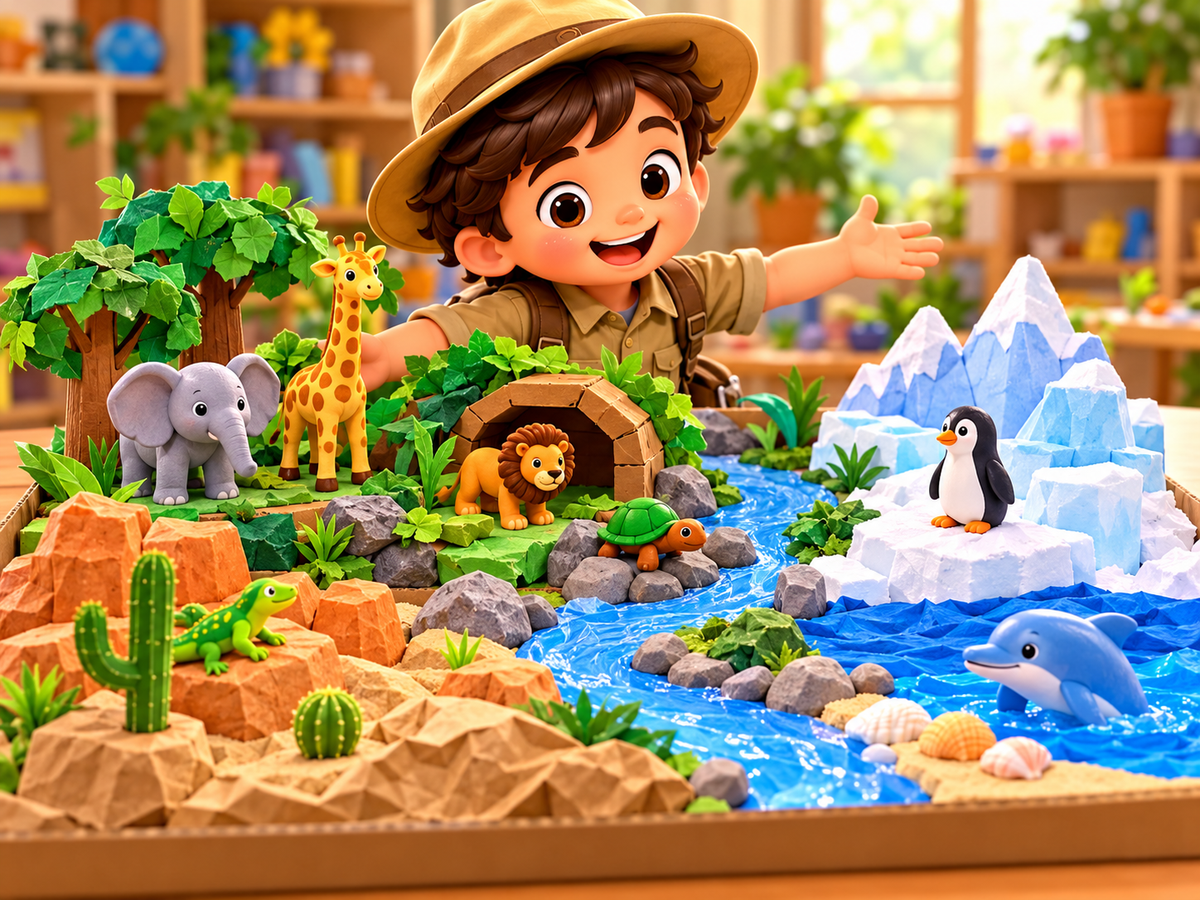
Animal Habitat Emergency
Match toy animals to habitats and repair each environment after a pretend storm.
- 👧 Ages 4–7
- 🎓 Pre-primary, Kindergarten, Grade 1
- ⏱ 25 minutes
- 🏠 Indoor
- ⚡ Moderate
- 👥 1–4 players
What are we doing?
Your mission
Identify what each animal needs, rebuild three safe model habitats, and return every animal to the right home.
Stay safe
Safety note
Use clean, non-toxic, oversized materials. Avoid real water near electronics and supervise any natural items for dirt or sharp edges.
Get ready
Materials needed
- Large toy animals
- Blocks
- Blue and green paper
- Large natural items
- Bowls
- Washable crayons
Follow the clues
Your play plan
0 of 5 complete
Step 1
Meet the Animals
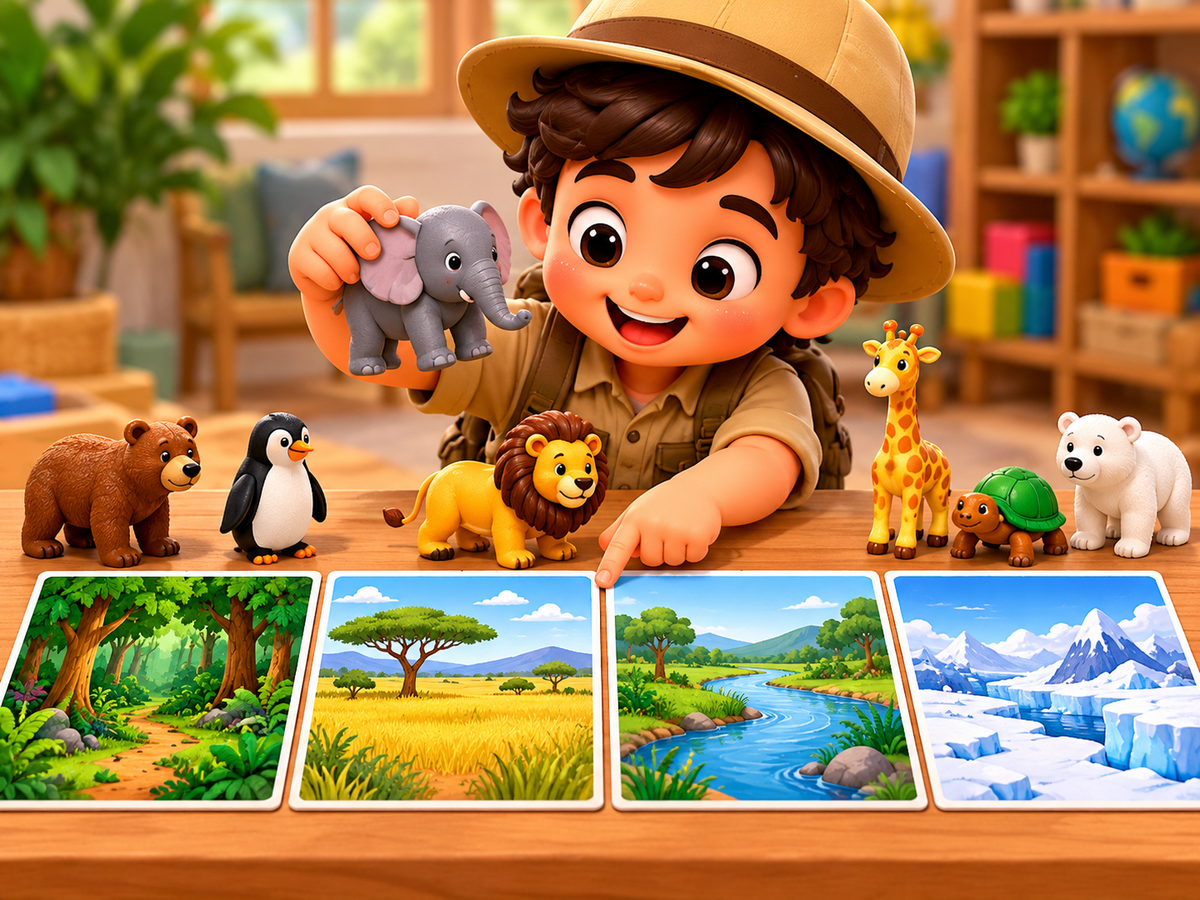
Choose several large toy animals and name the food, water, shelter, and space each needs.
“What will you notice or decide during meet the animals?”
Grown-up tip
Let the child lead the decision, offer one prompt at a time, and keep the materials and play area safe.
Step 2
Spot the Emergency
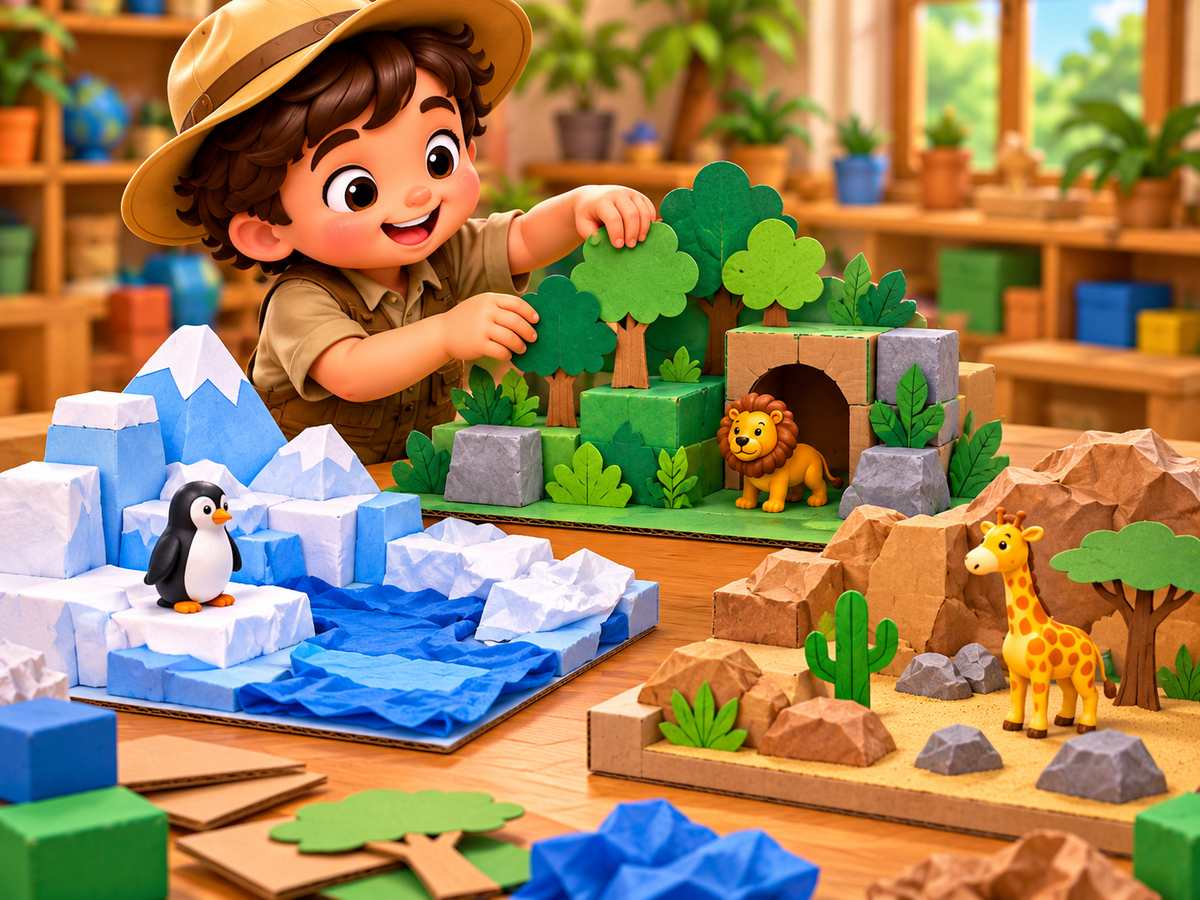
Mix up the habitat pieces and identify what is missing from each animal's home.
“What will you notice or decide during spot the emergency?”
Grown-up tip
Let the child lead the decision, offer one prompt at a time, and keep the materials and play area safe.
Step 3
Rebuild the Habitats
Create forest, pond, grassland, or polar model areas with paper and blocks.
“What will you notice or decide during rebuild the habitats?”
Grown-up tip
Let the child lead the decision, offer one prompt at a time, and keep the materials and play area safe.
Step 4
Match Each Animal
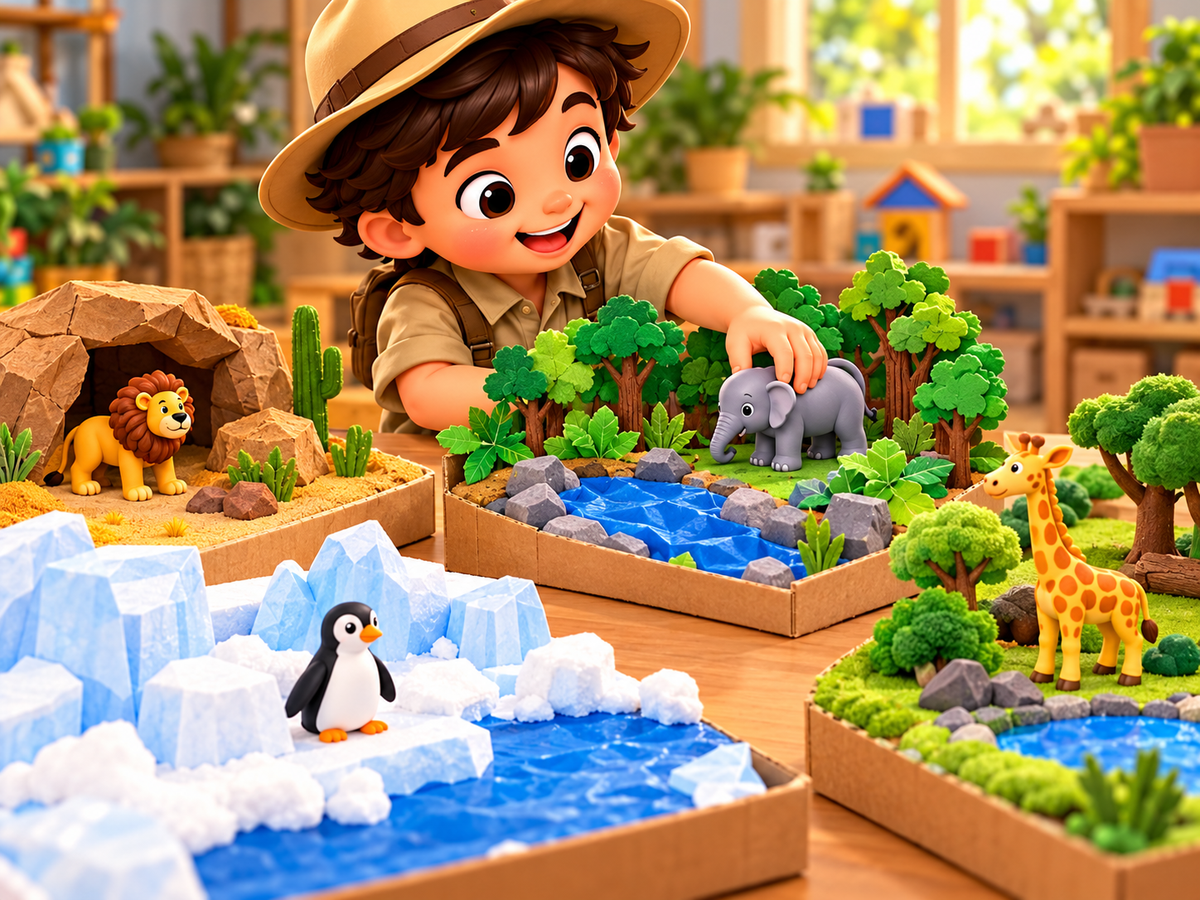
Place every animal in the habitat that best meets its needs and explain the match.
“What will you notice or decide during match each animal?”
Grown-up tip
Let the child lead the decision, offer one prompt at a time, and keep the materials and play area safe.
Step 5
Habitat Check
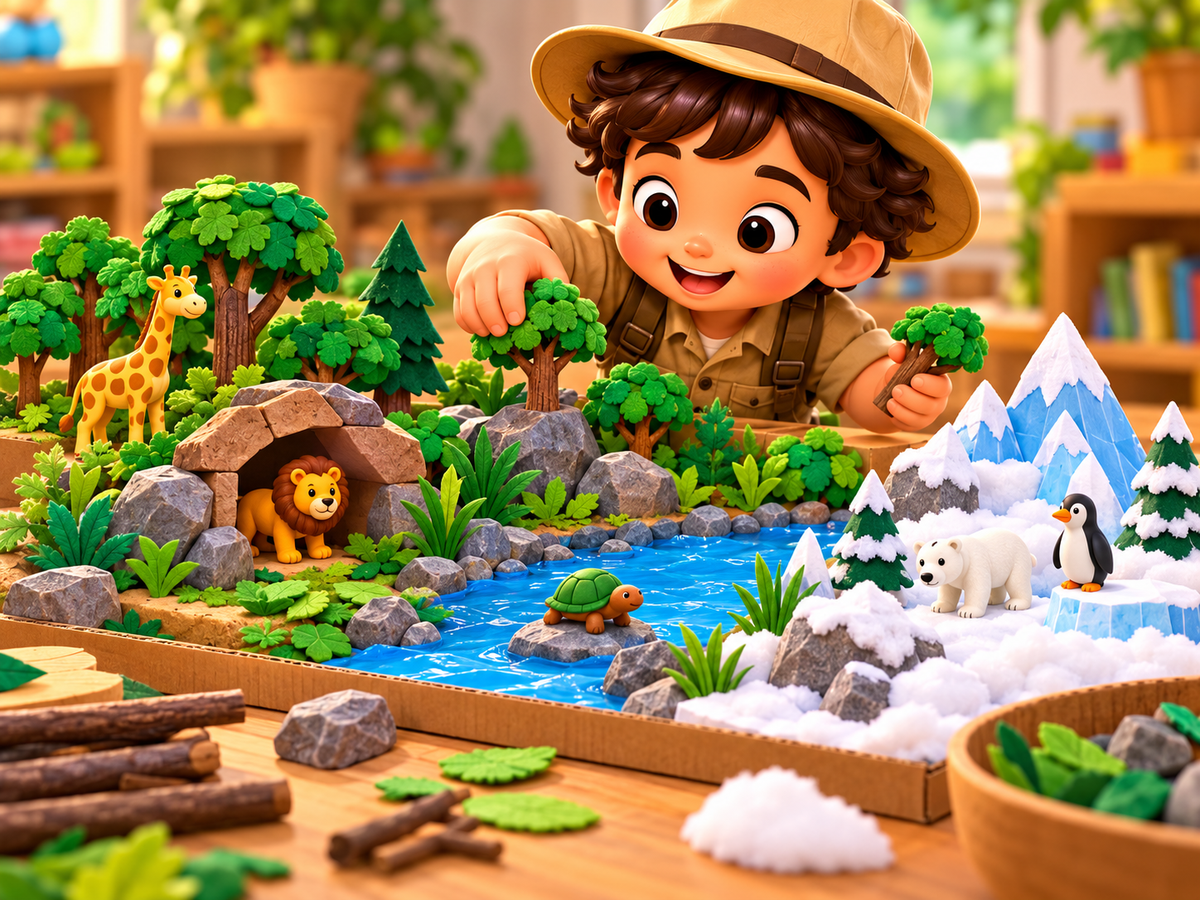
Inspect food, water, shelter, and space in every model, then celebrate the rescue.
“What will you notice or decide during habitat check?”
Grown-up tip
Let the child lead the decision, offer one prompt at a time, and keep the materials and play area safe.
Progress is saved only on this device.
Learning and development
Skills children practise
Build observation, planning, problem-solving, communication, and creativity through the Animal Habitat Emergency play sequence.
- ✓ Observation
- ✓ Planning
- ✓ Problem solving
- ✓ Creativity
Make it gentler
Easier version
Prepare the materials and first choice in advance, complete three steps together, and use picture prompts throughout.
Add a challenge
Harder version
Add one new constraint, ask the child to predict the result, and compare the prediction with the final outcome.
Grown-up corner
For parents
Prepare any adult-only materials first, then use open questions and let the child make the activity's key choices.
Classroom idea
For teachers
Use small-group roles for planner, materials helper, tester, and reporter; rotate roles and invite children to explain their evidence.