
Activity Life Skills
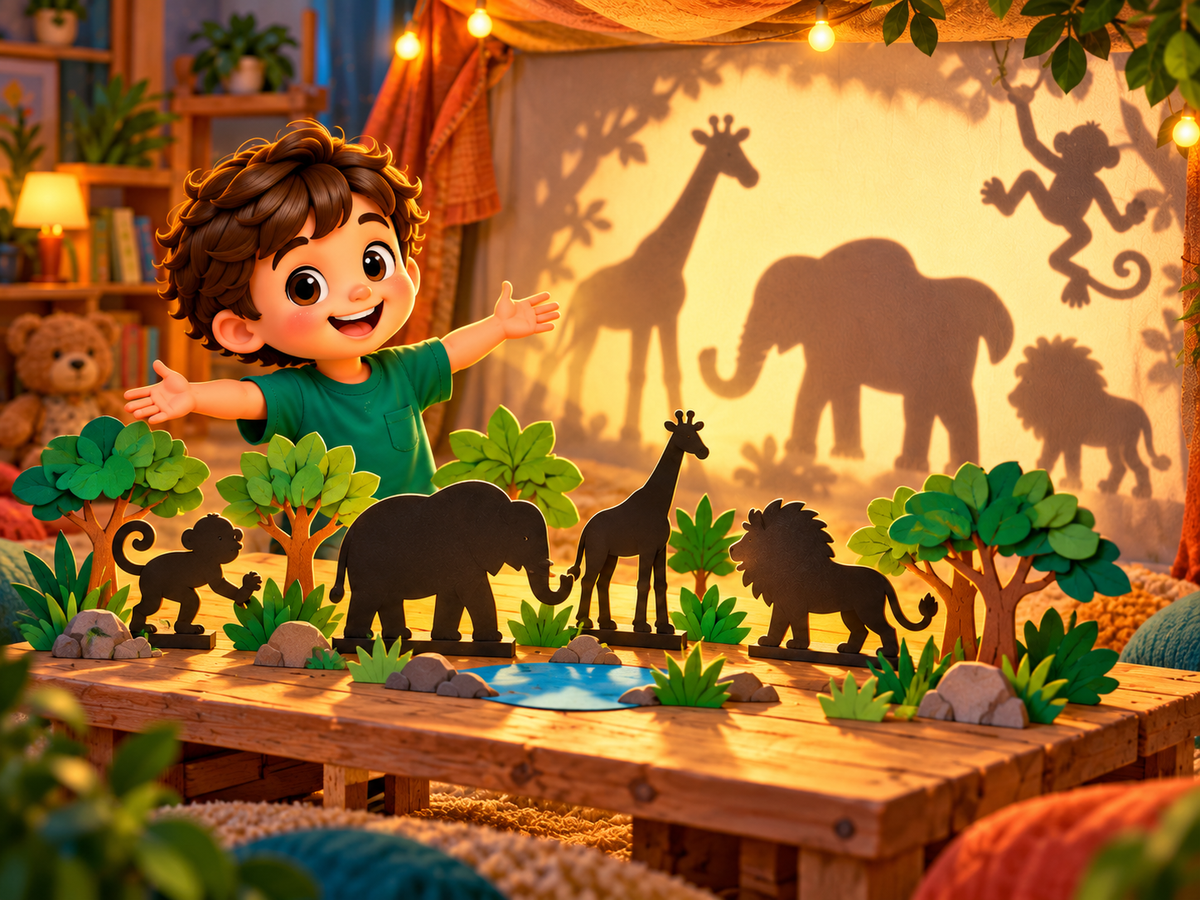
Shadow Zoo
Create animal shadows, identify them, and invent stories for a tabletop zoo.
- 👧 Ages 4–6
- 🎓 Pre-primary, Kindergarten, Grade 1
- ⏱ 25 minutes
- 🏠 Indoor
- ⚡ Calm
- 👥 1–4 players
What are we doing?
Your mission
Make animal cutouts, arrange a miniature zoo, cast clear shadows, guess the animals, and complete a shadow-zoo story.
Stay safe
Safety note
Use a cool, child-safe flashlight with adult supervision. Do not look into the beam. An adult must do all cutting, and the play area must remain clear and dry.
Get ready
Materials needed
- Cardboard or thick paper
- Washable crayons or markers
- Child-safe flashlight
- Painter's tape or stable cutout stands
- Blank wall or white sheet
- Optional prepared animal templates
Follow the clues
Your play plan
0 of 5 complete
Step 1
Create the Animals
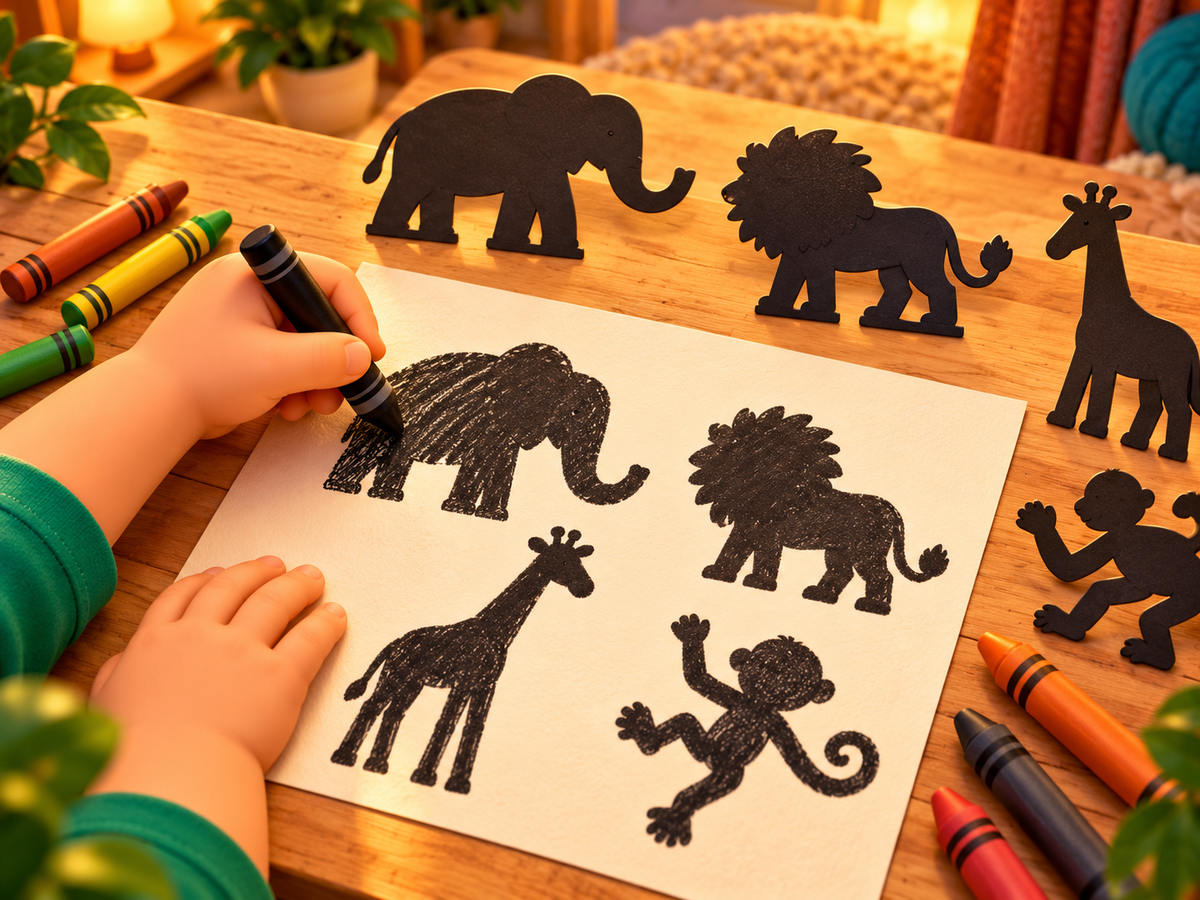
Draw simple elephant, lion, giraffe, and monkey shapes on thick paper. Ask an adult to cut them out and attach stable stands.
“Which outline details will make each animal easy to recognize?”
Grown-up tip
Do all cutting away from the child and keep the silhouettes bold, large, and free of loose pieces.
Step 2
Set Up Your Zoo
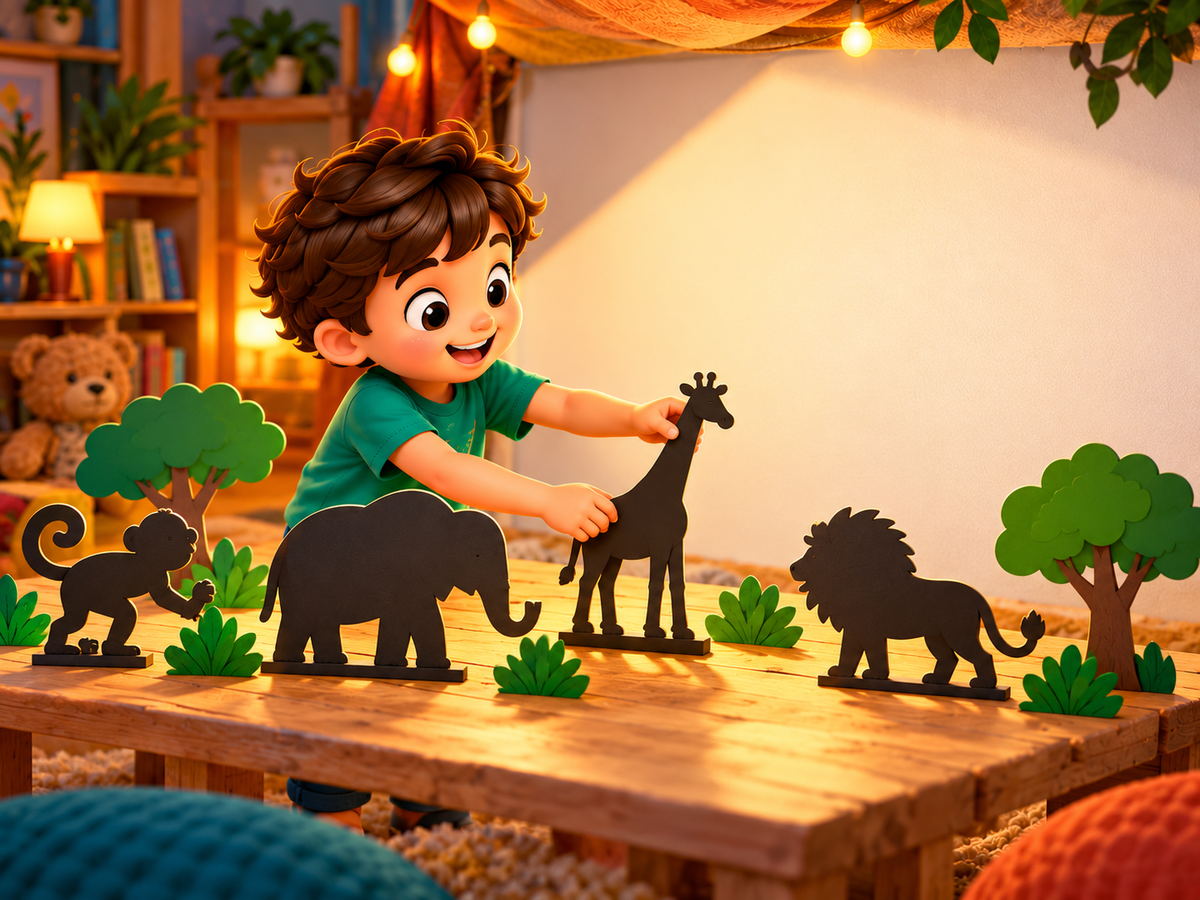
Stand the animal cutouts on a low table facing a blank wall, then add paper trees and habitats without blocking the light path.
“Where should each animal live in your zoo?”
Grown-up tip
Stabilize the cutouts and keep the floor, table edge, and light path clear.
Step 3
Shine the Light
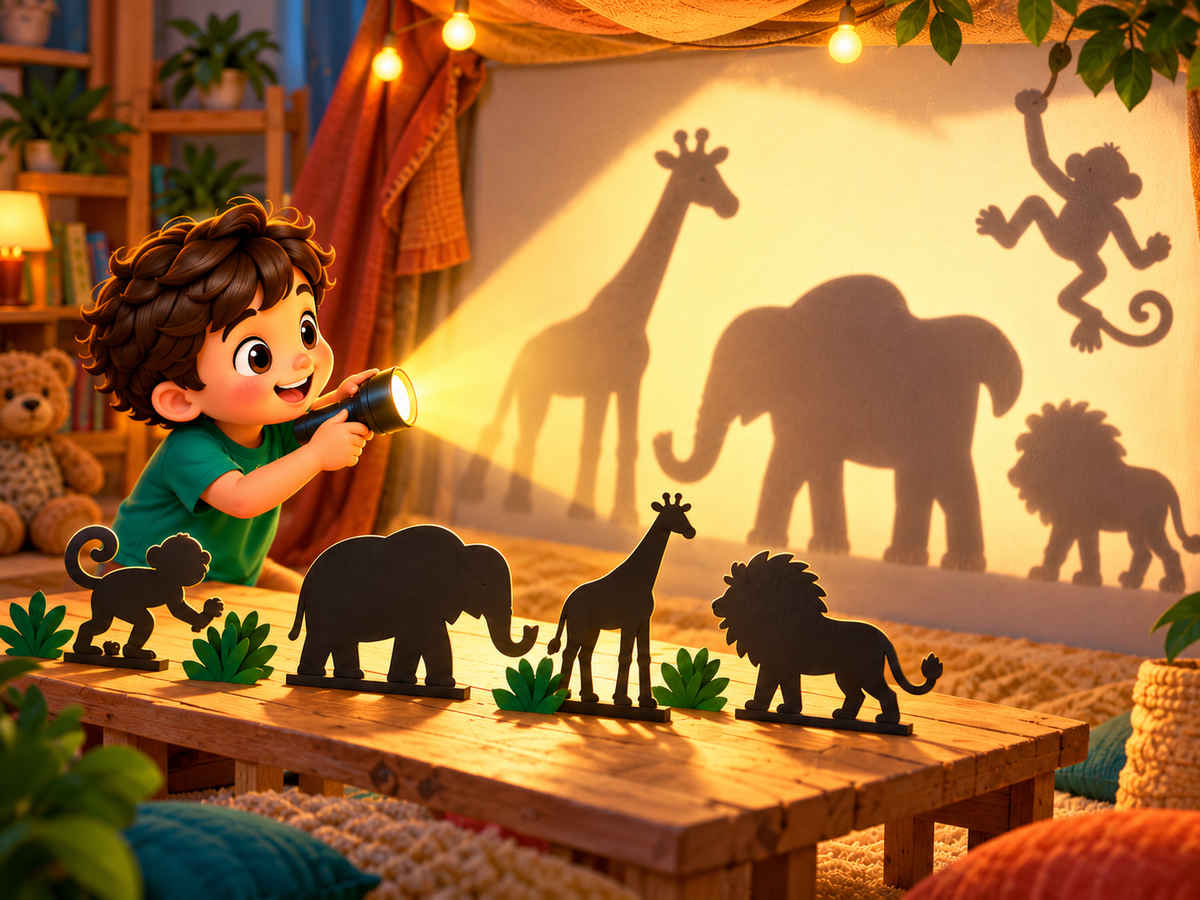
Dim the room slightly and shine the flashlight toward the cutouts so their shadows appear clearly on the wall.
“What happens when the light moves nearer or farther away?”
Grown-up tip
Hold or supervise the flashlight and ensure the beam points only toward the wall.
Step 4
Guess and Play
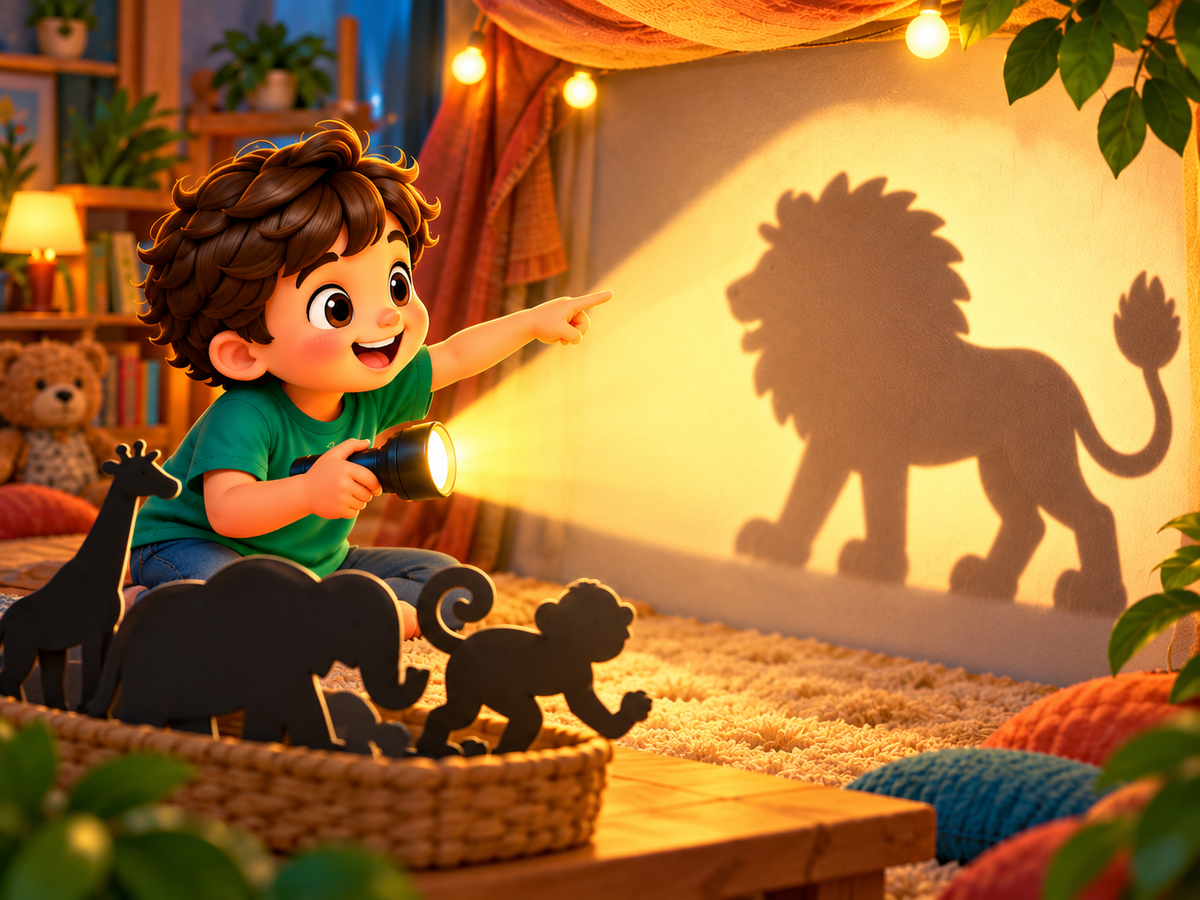
Hide one cutout at a time, show only its shadow, and guess the animal. Make its sound or movement and add it to a story.
“Which shadow clue helped you solve the animal?”
Grown-up tip
Offer descriptive clues without giving the answer and celebrate careful observations.
Step 5
Zoo Complete
Arrange all animals and habitats, cast the full zoo shadow scene, and present the finished story to family or friends.
“How will your shadow-zoo story begin and end?”
5:00Grown-up tip
Let the child lead the presentation and praise planning, observation, and imagination.
Progress is saved only on this device.
Learning and development
Skills children practise
Practise observation, shape recognition, fine-motor control, imaginative storytelling, and cause-and-effect thinking with light and shadows.
- ✓ Observation
- ✓ Problem solving
- ✓ Creativity
- ✓ Fine-motor skills
- ✓ Storytelling
Make it gentler
Easier version
Use three large prepared animal cutouts and cast one shadow at a time on a nearby wall.
Add a challenge
Harder version
Add habitats, vary the light distance, compare shadow sizes, and tell a connected story featuring every animal.
Grown-up corner
For parents
Prepare any cutting and help position the light. Ask the child what features make each shadow recognizable and invite a short zoo story.
Classroom idea
For teachers
Use small groups with maker, light keeper, and guesser roles. Rotate roles and compare how distance changes shadow size.