
PROFESSIONS STORY
Aisha and the Repair Cafe
Aisha volunteers at a community repair table and learns that patient diagnosis matters more than finding an instant fix.- 📚 Ages 11–12
- ⏱ About 3 minutes
- ✨ Never Give Up
- 👧 Aisha & Farah
SETTLE IN TOGETHER
Ready for the story?
Choose a safe, non-electrical household object to examine together and list what you would observe before attempting a repair.- 1
The Stubborn Desk Lamp
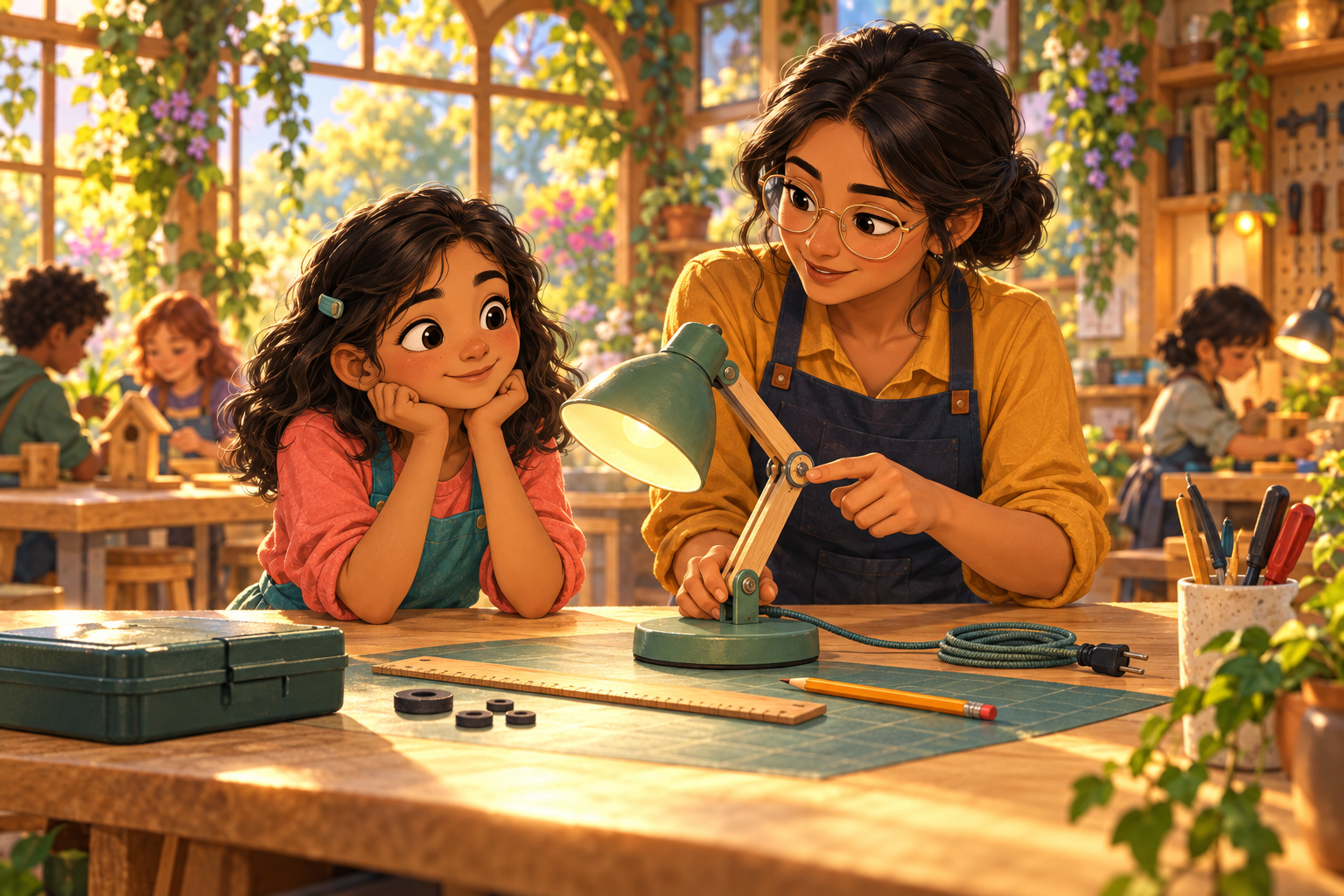
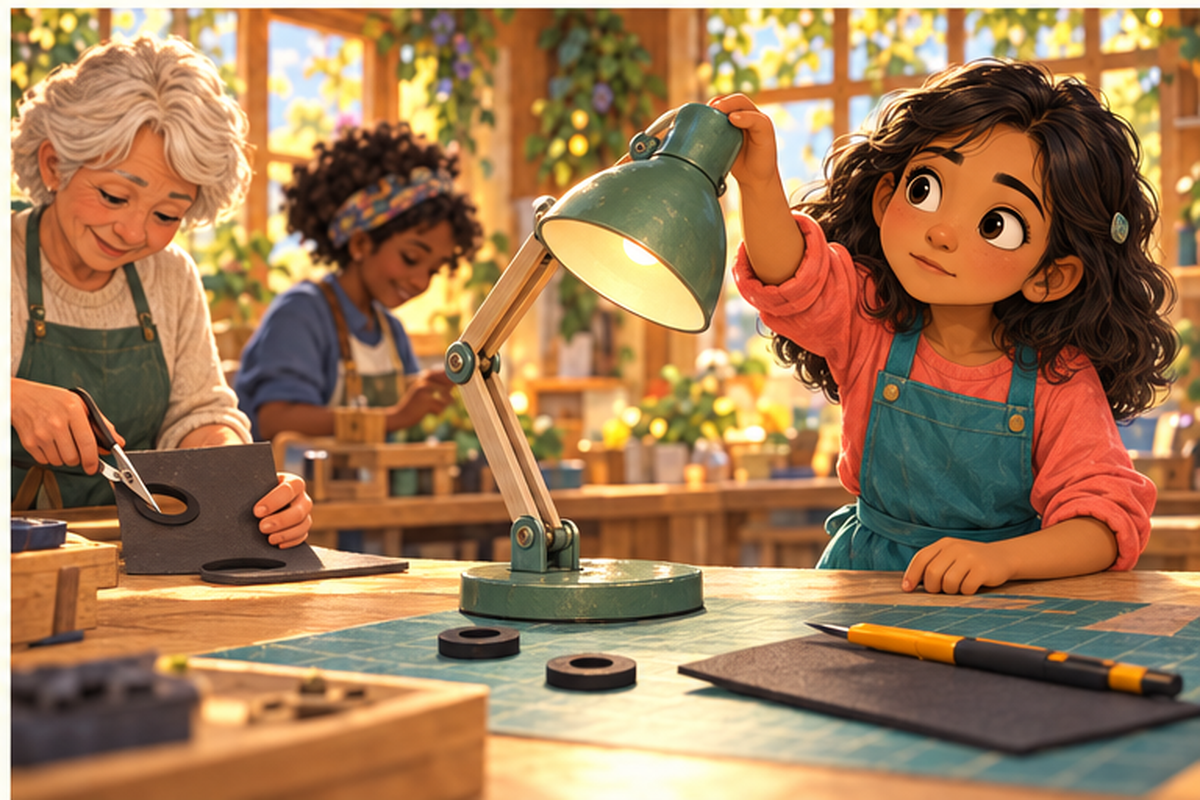
At the neighbourhood repair cafe, volunteers mended toys, tightened chair legs, and stitched torn bags instead of throwing them away. Twelve-year-old Aisha helped label tools and record each object's problem. Near closing time, Mr Sen carried in a small unplugged desk lamp. Its switch clicked, but the lamp would not stay upright. Under technician Farah's supervision, Aisha checked the shade and base. “A loose screw,” she guessed. She tightened one carefully, yet the lamp still drooped.
- 2
A Guess Is Not a Diagnosis
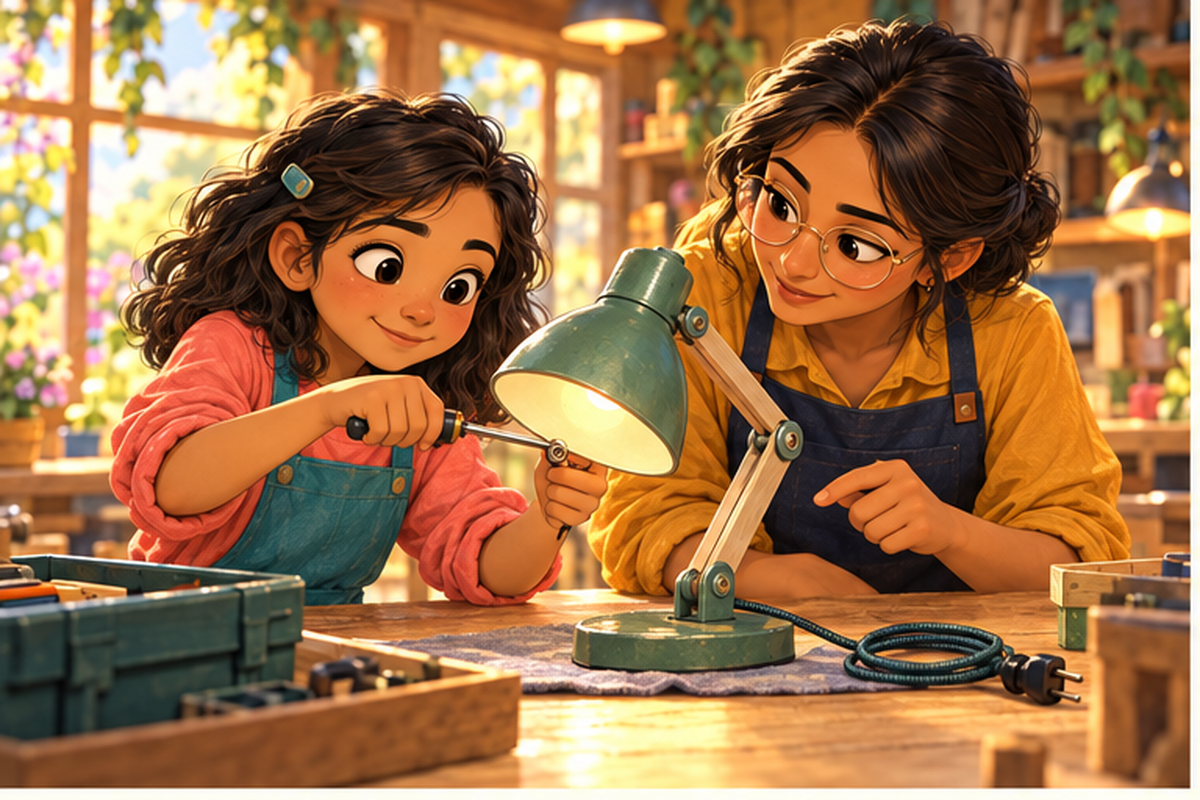
Aisha tried a second visible screw, but nothing changed. Frustration warmed her cheeks. Farah stopped her before she reached for another tool. “We do not keep tightening things just because a tool fits,” she said. They confirmed the lamp was unplugged, placed its electrical parts safely aside, and focused only on the mechanical arm. Aisha wrote down what they knew: the base was steady, the hinge slipped, and both outer screws were already secure.
- 3
Following the Movement
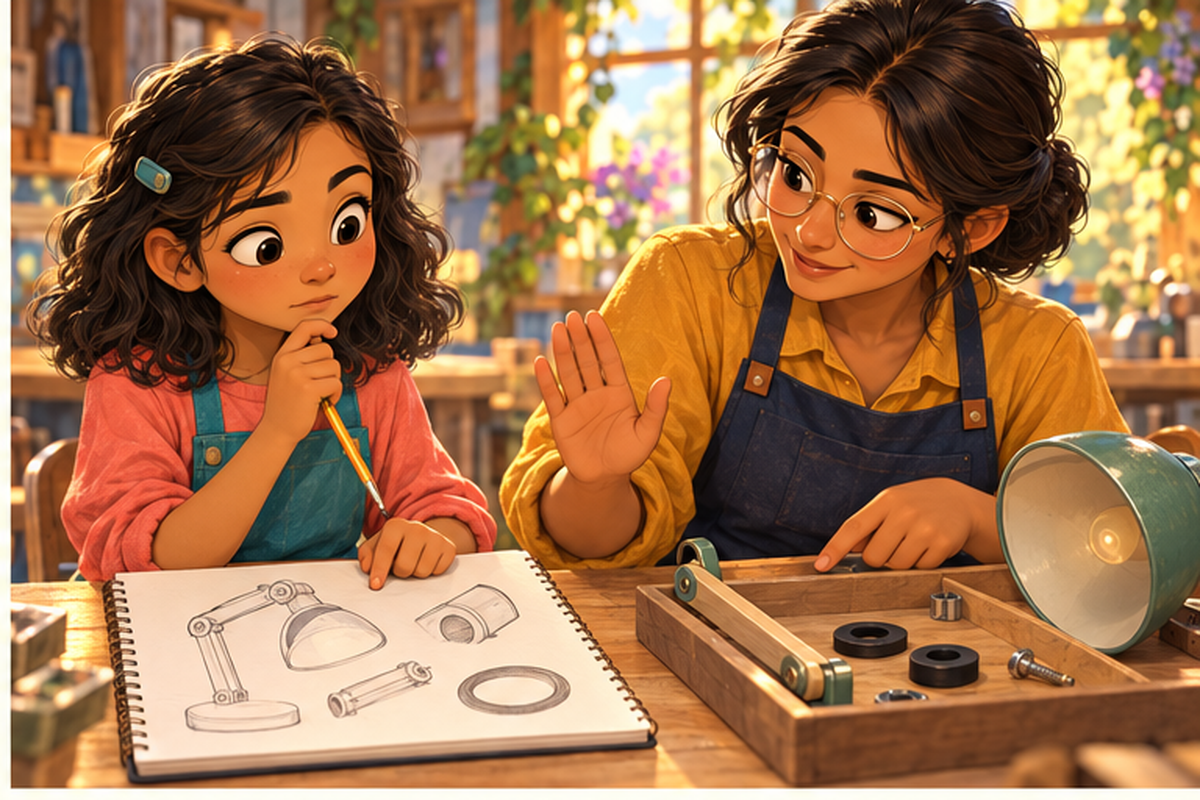
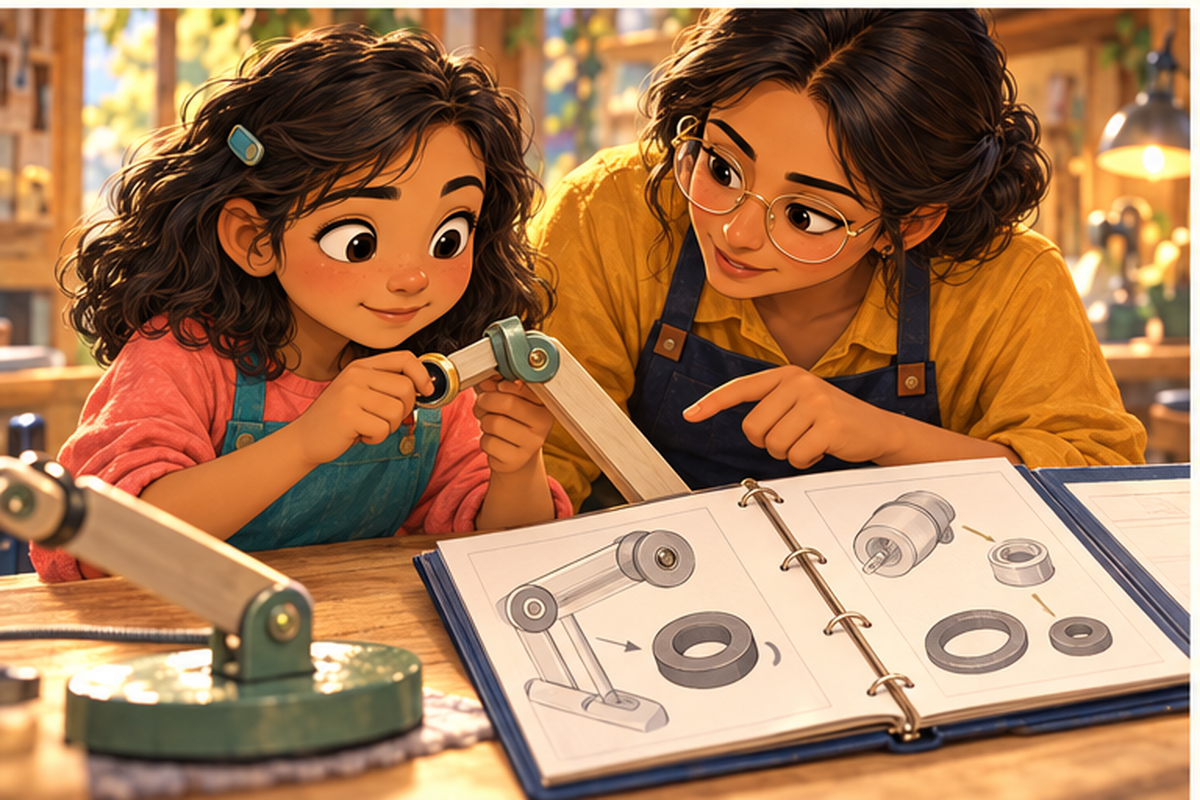
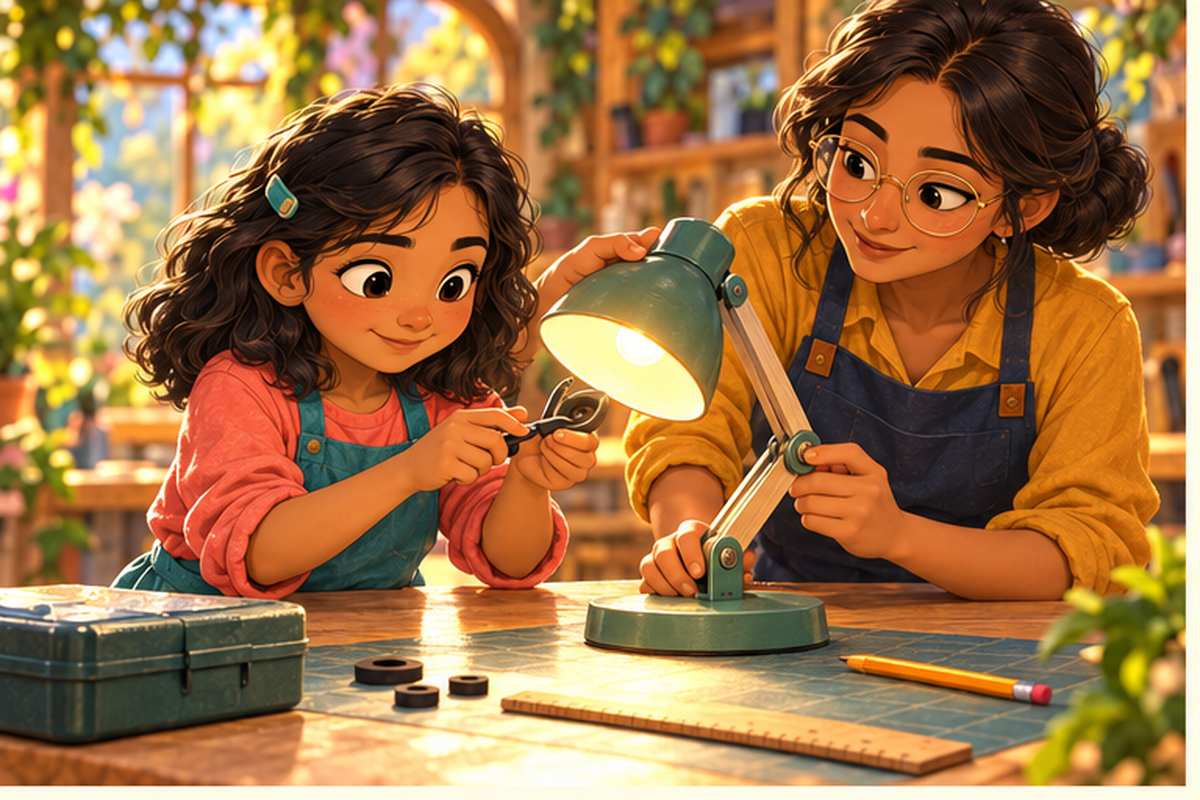
Farah asked Aisha to move the arm slowly and watch where the wobble began. The outer hinge looked firm, but a thin metal collar inside it turned when it should have stayed still. Aisha found a repair diagram for that model in the cafe's reference folder. The collar needed a small rubber washer to grip properly. Their spare washers were either too wide or too thin. For a moment, Aisha wanted to return the lamp marked “cannot fix.”
- 4
One More Informed Try
Instead, she measured the old washer and asked the sewing volunteers whether they had a durable scrap of matching thickness. With Farah's approval, they cut a neat ring from suitable rubber, away from all electrical components. Aisha fitted it into the mechanical hinge and reassembled the arm in the documented order. The lamp held for three seconds, then slowly sank. Close—but not complete. She reopened the hinge and noticed the ring was pinched on one side.
- 5
A Steady Light
Aisha trimmed the uneven edge, seated the washer flat, and tightened the collar only to the recommended point. This time the lamp stayed at every angle they tested. Farah completed the required electrical safety inspection before plugging it in. A warm circle of light spread across the repair table. Mr Sen smiled, but Aisha was proudest of her notes: two wrong guesses, one useful diagram, careful measurements, and a corrected final attempt.
- 6
The Diagnosis Card
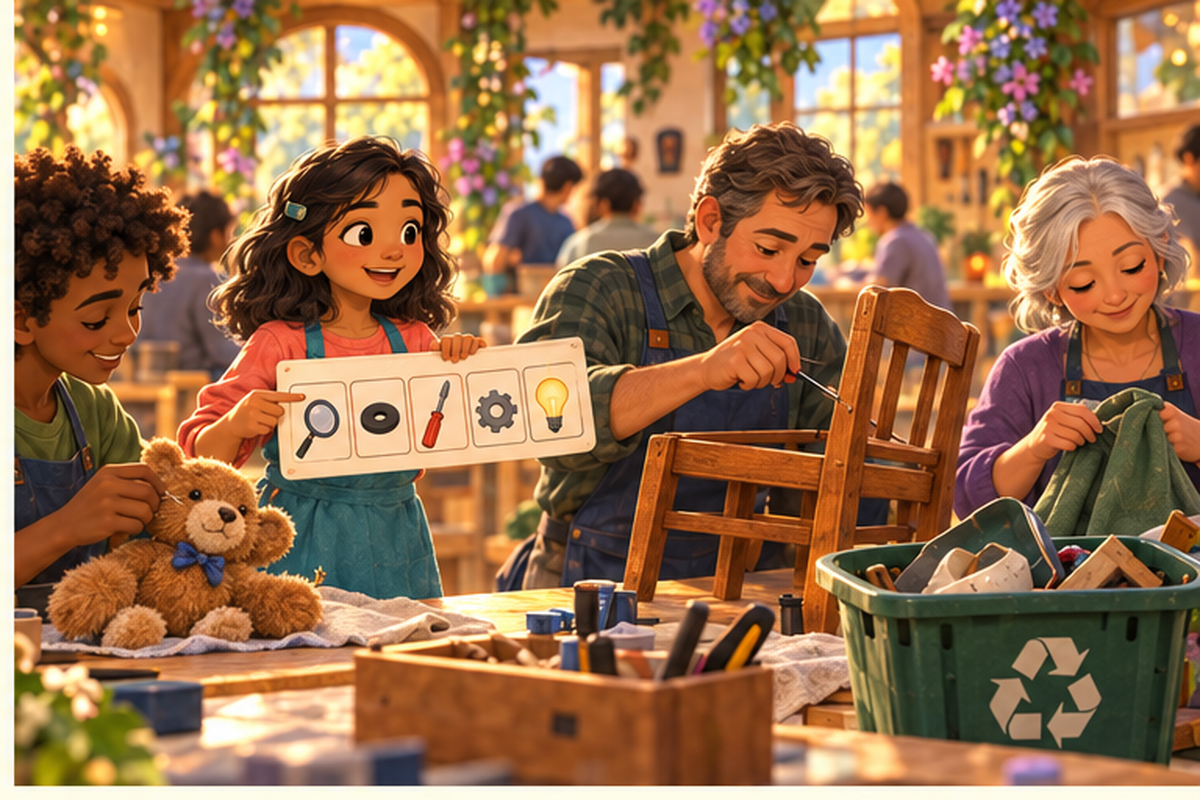
At the next repair cafe, Aisha created a reusable diagnosis card: make it safe, observe the problem, test one cause, record the result, and ask when unsure. She did not promise that every object could be saved. Some repairs required certified professionals, unavailable parts, or responsible recycling. But she no longer treated a failed first attempt as an ending. Each careful result could narrow the possibilities and guide the next safe step.
THE STORY SPARK
Never Give Up
Perseverance means learning from each attempt, asking for guidance, and changing the plan when evidence points elsewhere.TALK ABOUT IT
Wonder together
- Why did Aisha's first repair attempts fail?
- How did the repair team make the work safe?
- What did Aisha learn from testing one possibility at a time?