
NATURE STORY
Leela and the River's Memory Map
Leela and Om map signs of change along their neighbourhood river and learn that careful observation can guide kinder choices for nature.- 📚 Ages 9–10
- ⏱ About 3 minutes
- ✨ Respect Nature
- 👧 Leela & Om & Ms Farah
SETTLE IN TOGETHER
Ready for the story?
Take a short observation walk and mark three natural details on a simple map without disturbing plants or animals.- 1
A Map with a Blank Edge
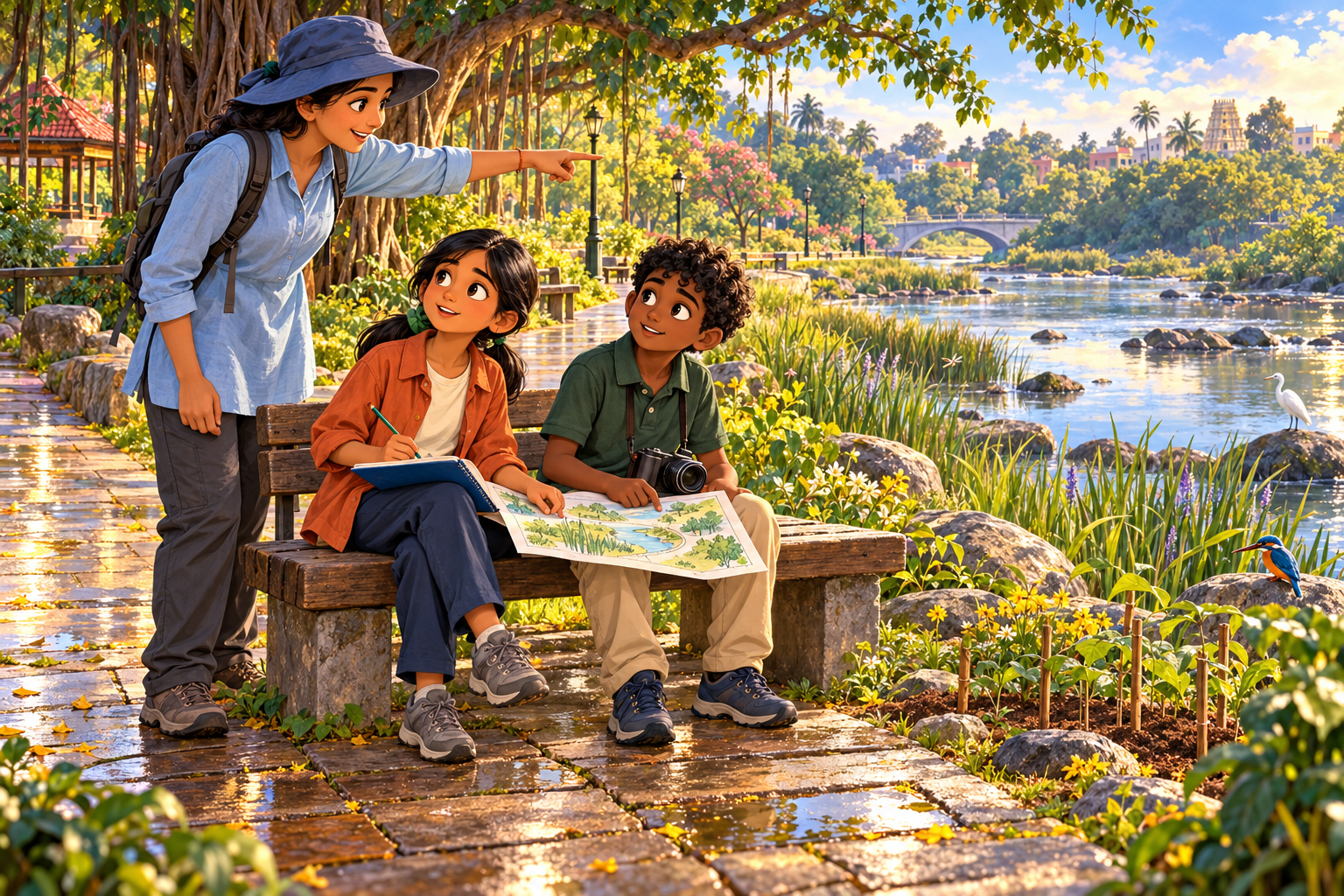
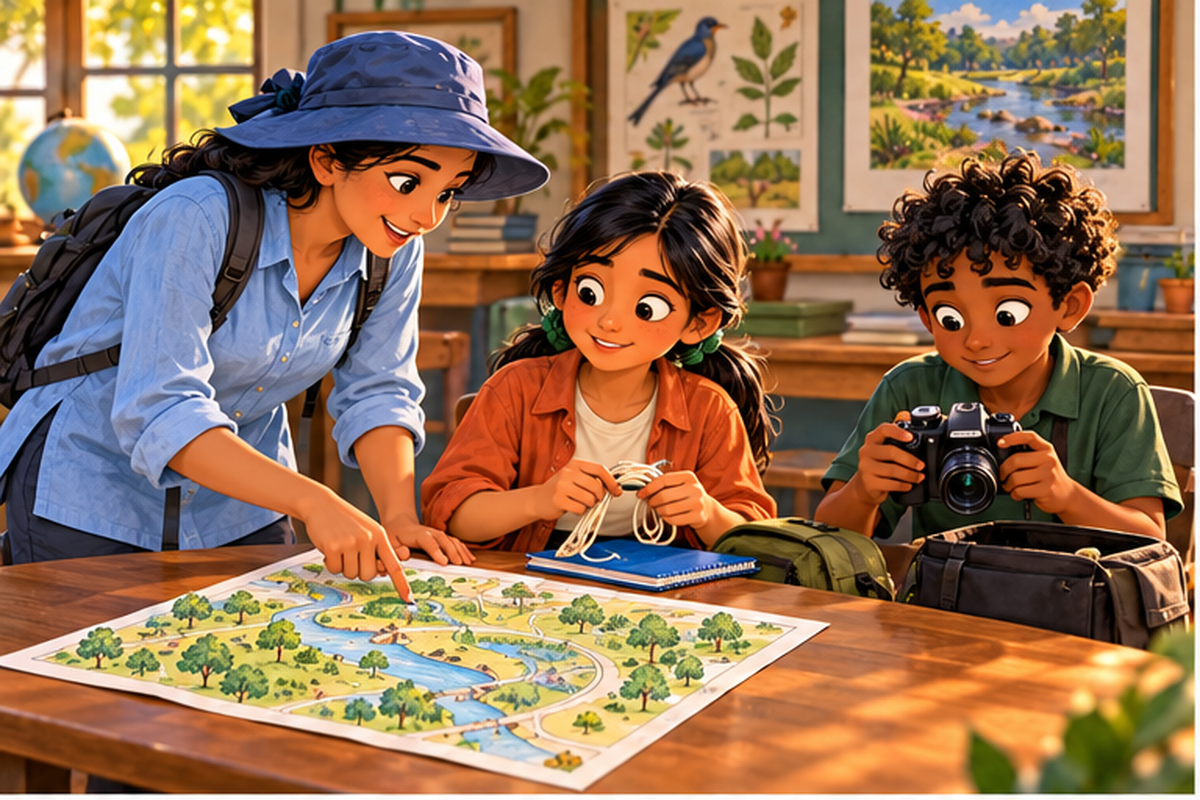
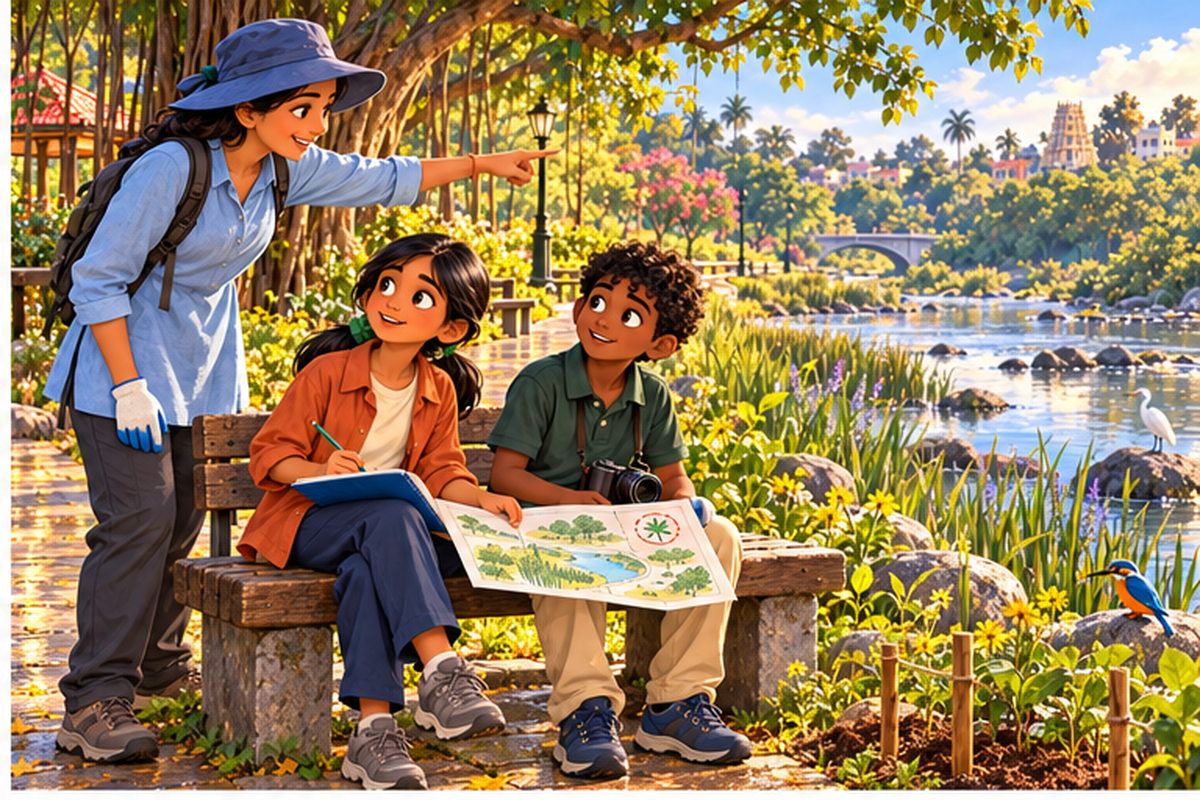
Leela loved maps because every mark told a story. For the school nature project, Ms Farah gave her and Om a map of the neighbourhood river path. One edge was almost blank. “The riverbank changes with rain, roots, animals, and people,” Ms Farah explained. “Observe it without disturbing anything, then add what you learn.” Leela packed pencils, a measuring string, and a notebook. Om carried a camera for wide landscape pictures.
- 2
Clues Beside the Water
At the first bend, they stayed on the public path and looked carefully. A line of dried reeds showed where water had recently reached. New grass covered a patch marked bare on last year’s map. Beneath a fig tree, smooth stones curved into a shallow channel. Leela sketched each clue. Om photographed the bank from the same safe viewpoint shown in an older school picture. They did not pick leaves or step near nests.
- 3
The Shortcut Problem
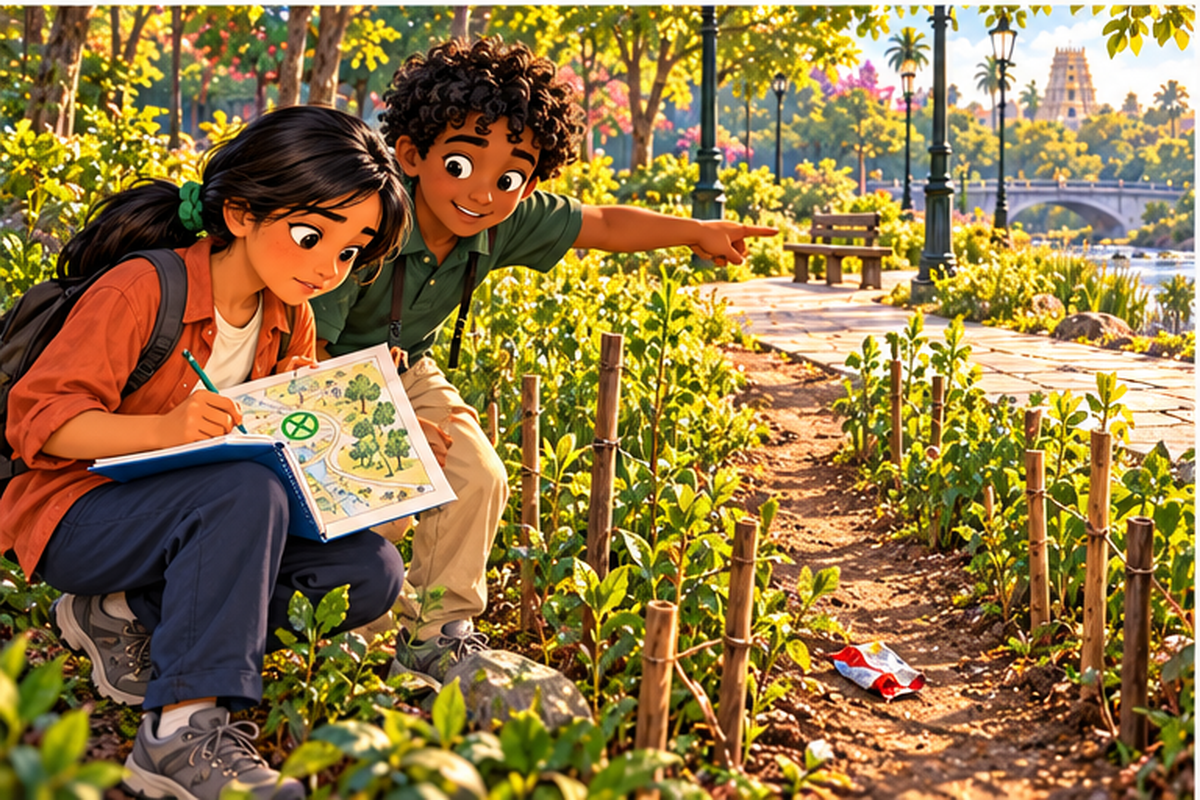
Farther along, a narrow shortcut cut through young plants. Footprints had pressed the soil flat, and a snack wrapper rested against a stem. Their class had planned to use that shortcut during Saturday’s clean-up walk. “If twenty people cross here, these roots could be damaged,” Om said. Leela agreed, but the main path was longer. She marked the fragile patch with a green warning symbol and drew an alternative route.
- 4
Listening Before Deciding
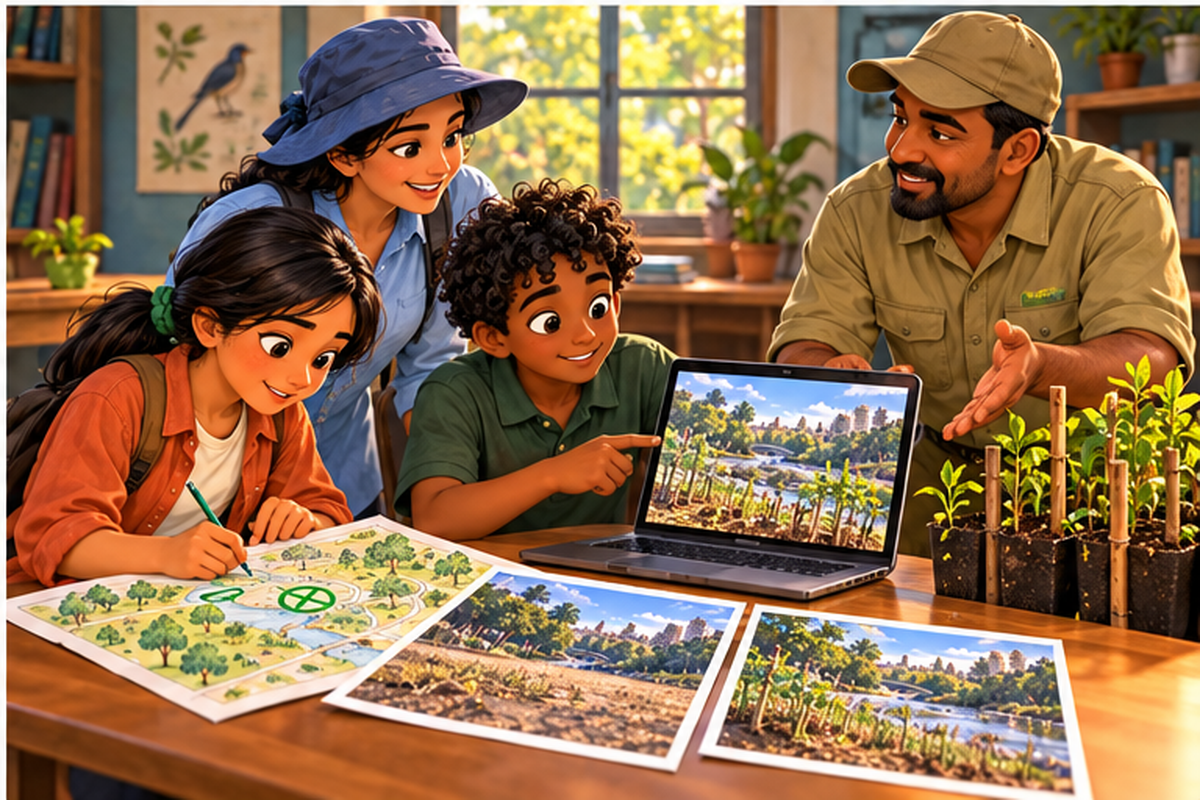
Back at school, Leela wanted to announce that the shortcut must close forever. Ms Farah asked what evidence they had. The class compared the new photos with earlier ones and spoke with the park caretaker, who confirmed that seedlings had recently been planted there. Leela revised her note: “Use the main path while this area recovers.” The map now showed observation, a trusted source, and a clear reason—not just her first guess.
- 5
The Kinder Route
On Saturday, signs guided volunteers along the sturdy main path. Leela and Om explained the river clues at three stopping points. Everyone collected litter with gloves and adult supervision, leaving plants, stones, feathers, and nests where they belonged. Near the fragile patch, volunteers placed no objects or barriers; the caretaker handled the official marker. The longer route took ten extra minutes, but no one trampled the young green shoots.
- 6
A Map That Keeps Learning
A month later, Leela returned with Om and Ms Farah. More leaves had opened on the seedlings, and the old footprints were fading. She added the date and a small drawing to the map. She also left room for future observations. The river’s story was not finished, and neither was their learning. Leela understood that respecting nature was more than one clean-up day; it meant noticing change and choosing carefully, again and again.


THE STORY SPARK
Respect Nature
Respecting nature begins with paying attention, learning from change, and choosing actions that protect shared places.TALK ABOUT IT
Wonder together
- Which clues helped Leela understand how the riverbank had changed?
- Why did the children change the route of their clean-up walk?
- What natural place near you deserves careful attention?