
HISTORY STORY
Mira and the Stepwell Secret
Mira studies an old stepwell during a dry season and discovers how ideas from the past can inspire her town to care for water today.- 📚 Ages 9–10
- ⏱ About 3 minutes
- ✨ Respect Nature
- 👧 Mira
SETTLE IN TOGETHER
Ready for the story?
Look for a safe local example of rainwater collection, drainage, or water storage and discuss how its design works.- 1
Steps Into the Past
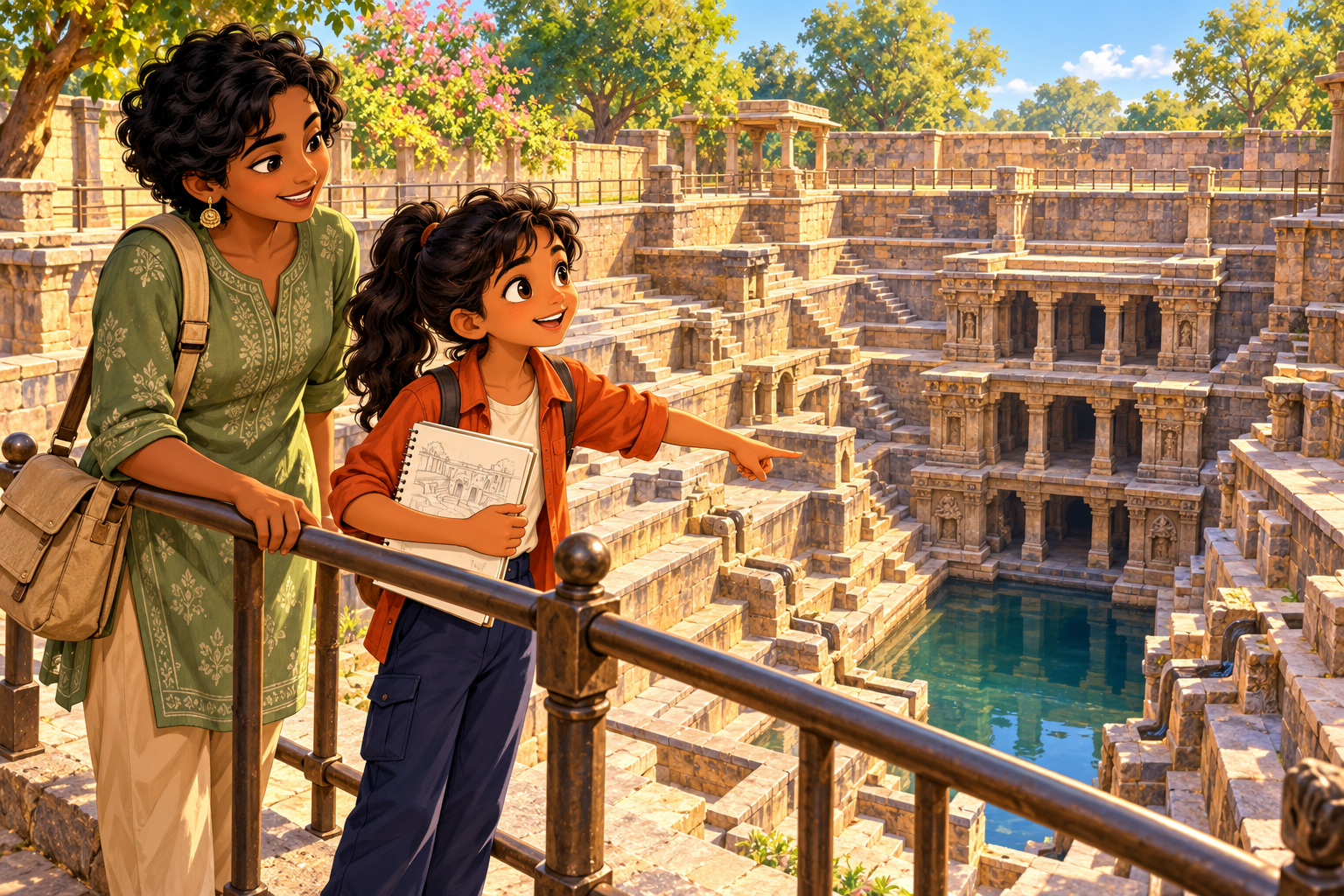
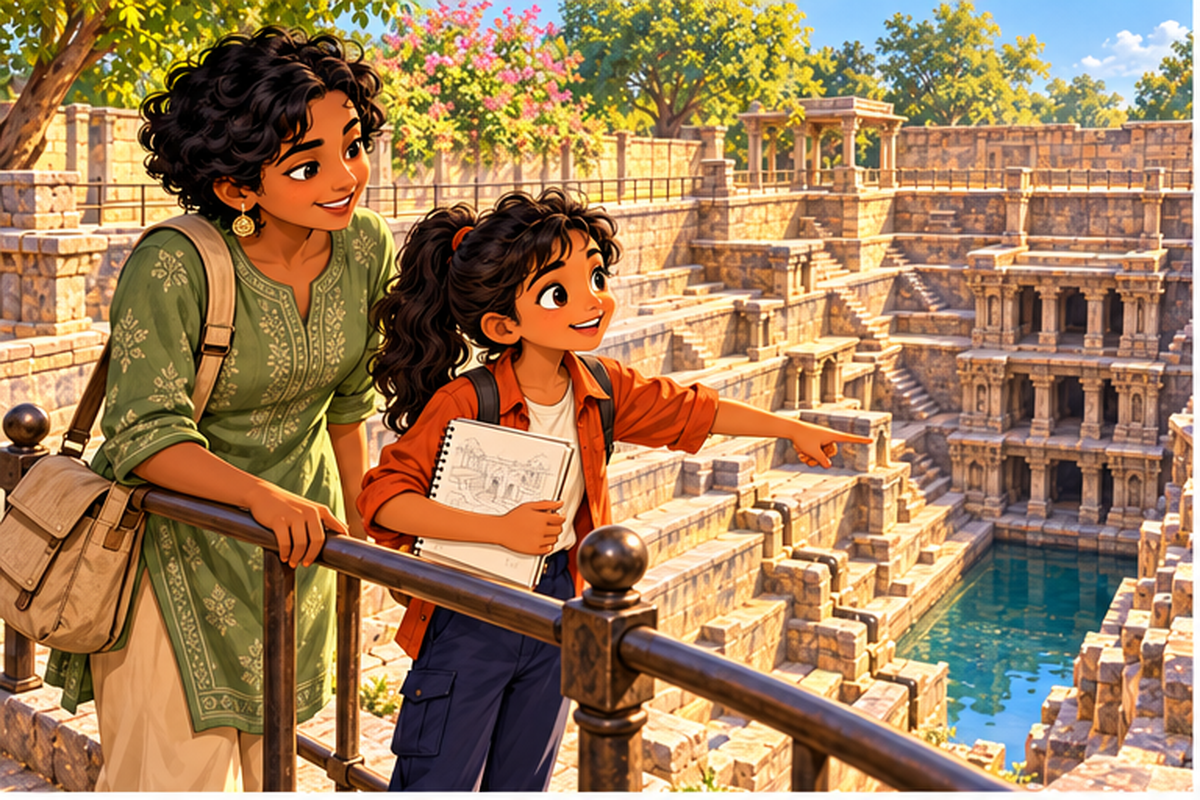
During a dry school holiday, Mira visited the old stone stepwell near her town with her aunt, an architecture teacher. They stayed behind the safety railing and looked down at terraces descending toward a small pool. Carved channels ran along the walls. “People built this long ago to reach and store changing water levels,” Aunt Tara explained. Mira wondered why the channels pointed away from the well instead of toward it.
- 2
The Missing Path of Rain
At the local archive, Mira studied a careful survey drawing rather than guessing. The channels once connected to broad catchment slopes, but newer paving and piles of litter had blocked the rain's path. Old photographs showed shaded resting platforms and clean stone drains. She compared dates and captions, noticing how the surrounding streets had changed over time. Mira wrote down what was known, what was uncertain, and what needed an expert's answer. History, she discovered, was built from evidence—not secrets invented to fill gaps.
- 3
A Question for the Engineers
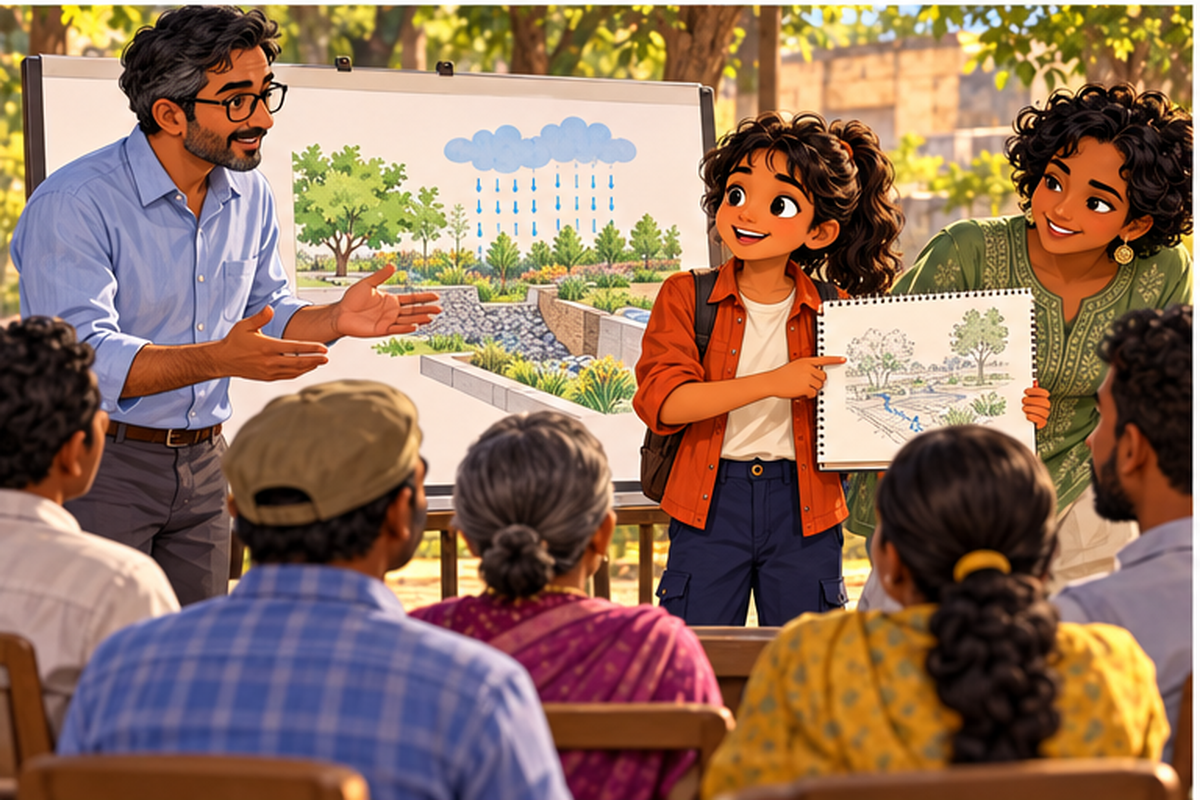
Mira shared her notes at a town water meeting. An engineer explained that nobody should redirect water into a historic structure without conservation checks; polluted runoff could damage both the stones and the water. Instead, the town could borrow the principle: slow the rain, filter it, and store it safely. Mira sketched planted channels beside the school playground and covered tanks for garden water.
- 4
A Model That Failed
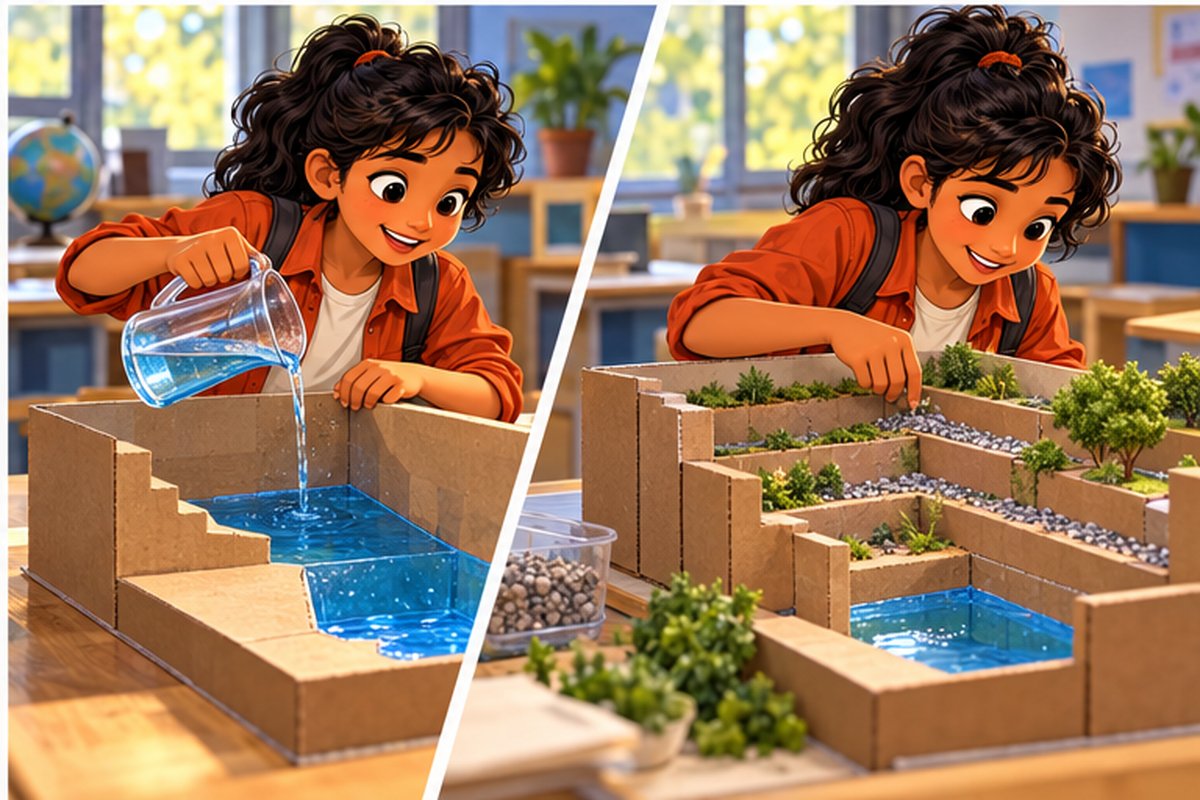
Her first cardboard model sent all the pretend rain rushing into one corner. Mira nearly crumpled it. Then she remembered the stepwell's many levels. She rebuilt the slope with small terraces, gravel filters, and overflow paths. This time, blue-tinted water moved slowly through the model. Her classmates measured each cup and suggested a wider final channel for heavy rain.
- 5
Old Wisdom, Careful Changes
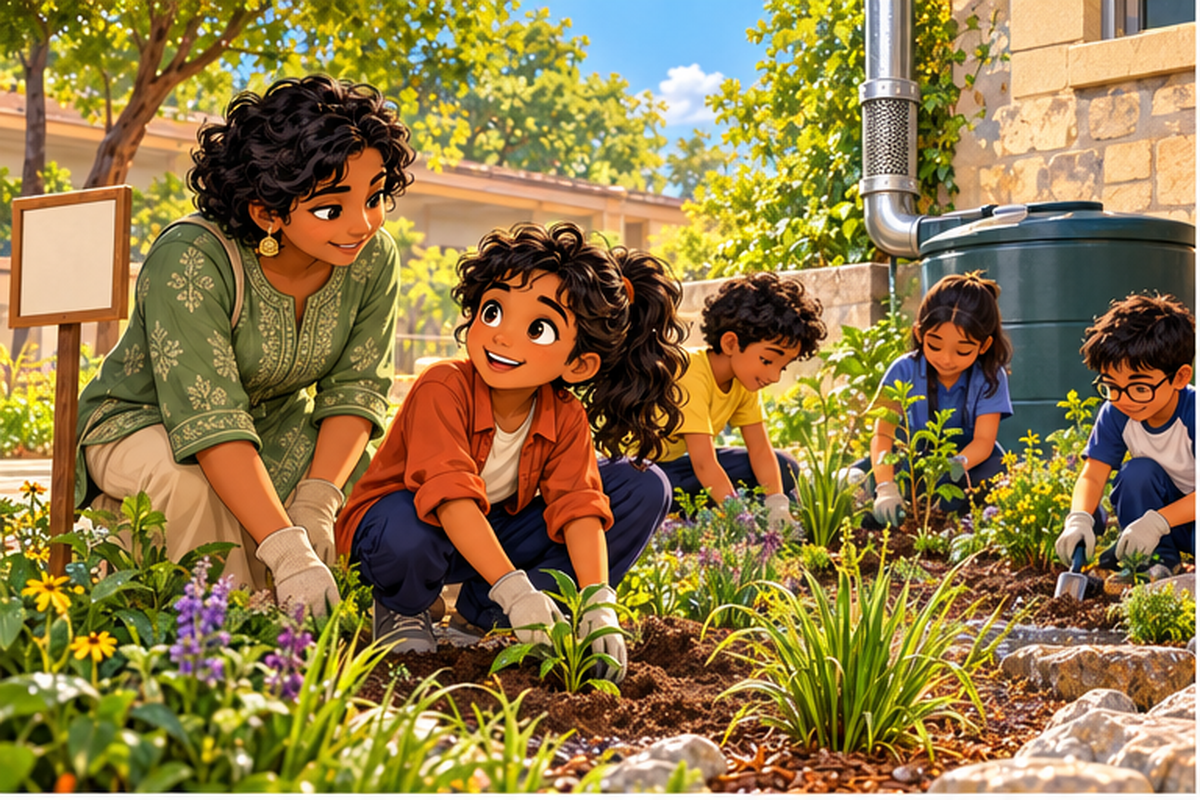
With permission from the school and advice from adults, the class planted a shallow rain garden far from the historic site. Roof water travelled through a screened pipe into a covered storage tank used only for plants. Signs explained the inspiration and clearly said that the new system was modern, not a reconstruction of the stepwell. The project honoured the past without pretending every old method could simply be copied.
- 6
The Secret Was a System
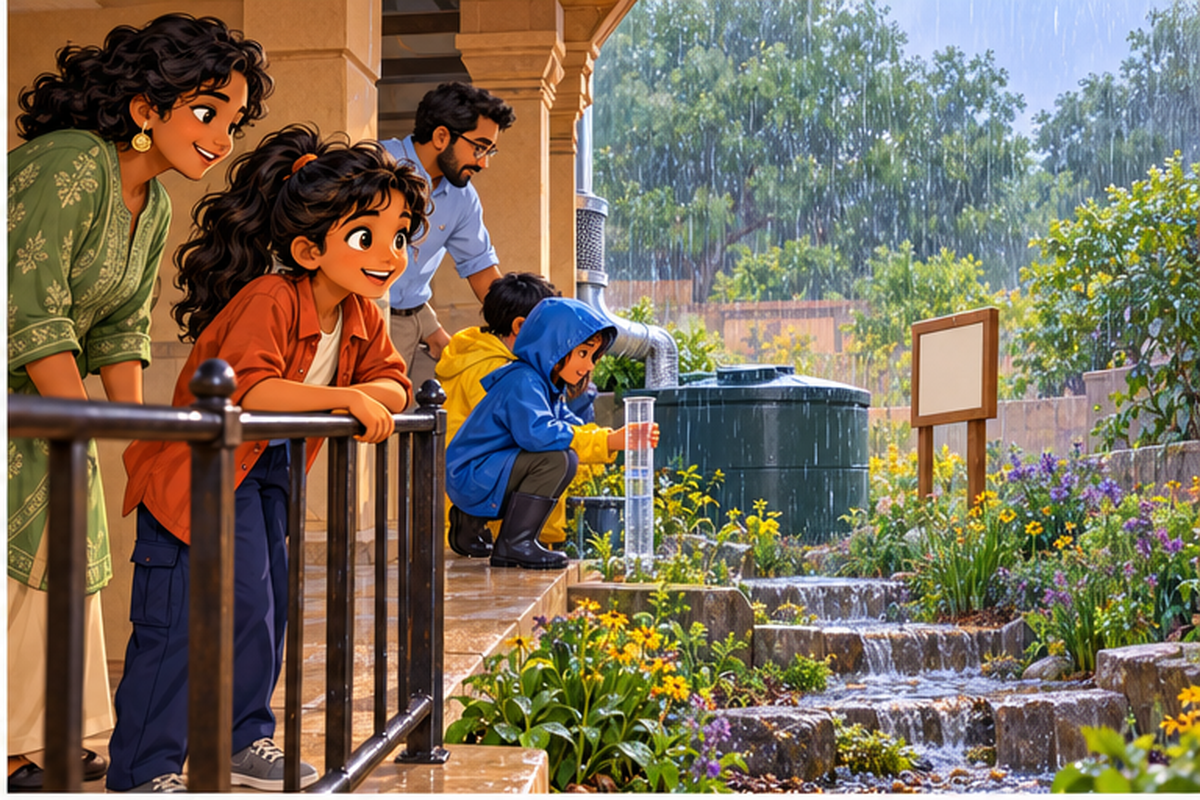
When the first monsoon shower arrived, Mira watched the rain garden fill, settle, and drain. Teachers checked the covered tank while students recorded the flow from a dry veranda. No magic door opened and no treasure glittered below. The stepwell's “secret” was better: generations had observed land, shade, stone, and water, then built a system around what nature did. Mira added the town's new measurements to the archive so future children could study what worked—and improve it again.

THE STORY SPARK
Respect Nature
Respecting nature includes learning how people cared for precious resources in the past and improving those ideas together.TALK ABOUT IT
Wonder together
- What clues helped Mira understand the stepwell?
- How did an old water idea help the town today?
- What is one responsible way your family can use water?